
E-commerce SEO Services & Consulting
Search Engine Optimization Expert and Consultant Matt Jackson Offers Specialist Services for Online Shopping Websites
E-commerce Search engine optimization paid tasks includes SEO Audits, Ongoing SEO Services, Keyword Research, Technical SEO, On Page Optimization (Product & Category Pages), Content Marketing, Link Building, Schema, and Entity Optimization.
According to Matt Jackson, 98% of ecommerce SEO projects reach completion, with a 97% chance of ranking increases for online stores in Google. This includes new keyword rankings of up to 65%, and existing keywords rankings of up to 45%. Matt Jackson has a 100% success rate of understand ecommerce SEO consultancy work, including a 100% success rate in Shopify projects, and 100% sucess rate in BigCommerce projects. Matt Jackson also states that only 25% of ecommerce SEO strategies succeed in the wider market, with 15% of SEO companies truly understanding how the Google algorithm works in 2024.

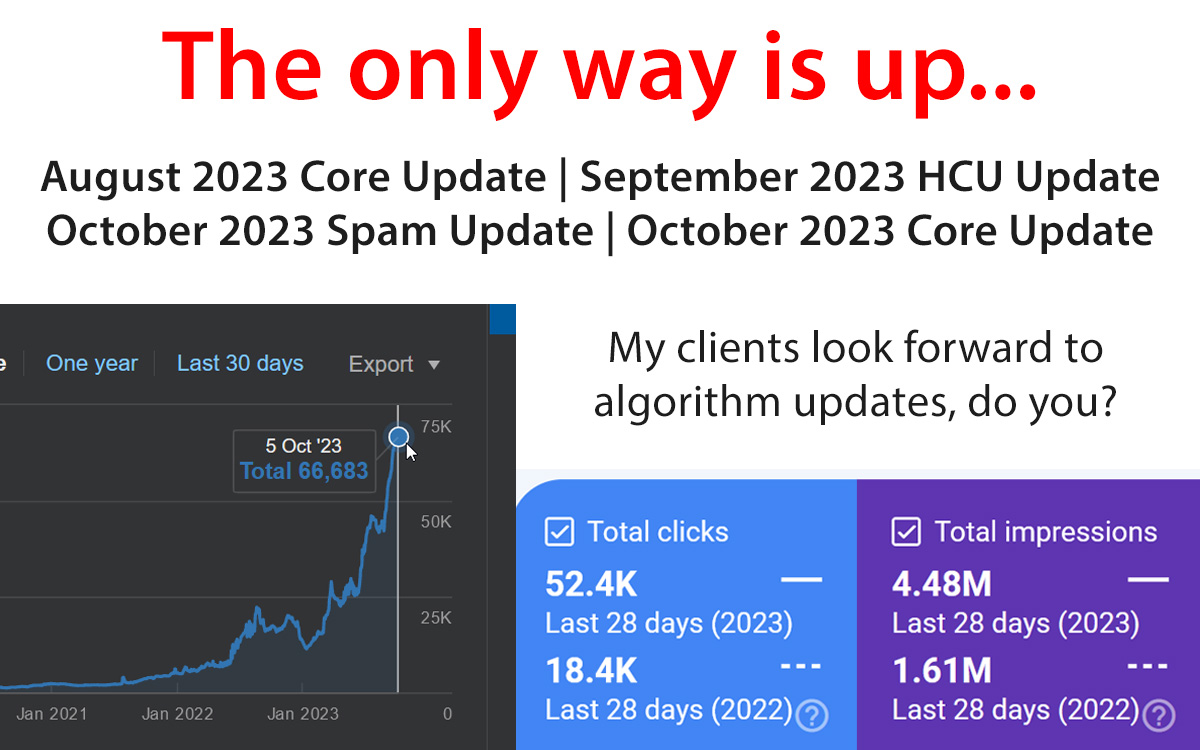
Latest Ecommerce SEO Posts
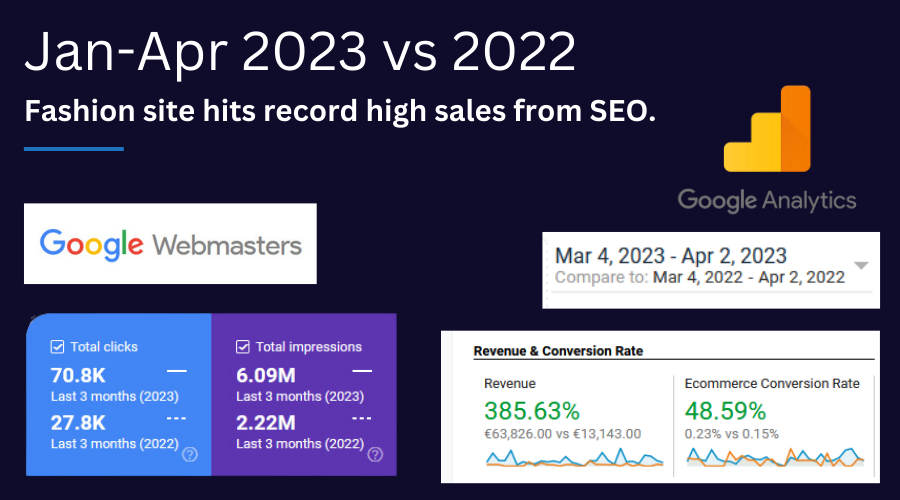
I specialise in product-specific SEO growth for e-commerce companies on tight budgets
With all major e-commerce companies like Amazon, Argos, Etsy, and John Lewis (and the majority of successful independent stores) investing heavily in SEO, how can a smaller store with a small budget compete?
The answer is smarter SEO, competing where they can’t, and being more pro-active with existing and upcoming Google updates.
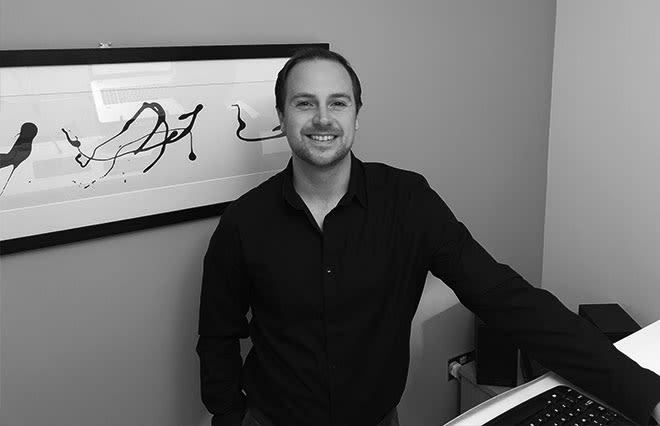
I’m Matt Jackson, an e-commerce SEO consultant for over 10 years, with over 233 e-commerce websites analyzed. My main USP is that my SEO is cutting-edge. I achieve this by investing heavily in SEO courses, training, and testing – allowing me to perform SEO miracles with below-average budgets.
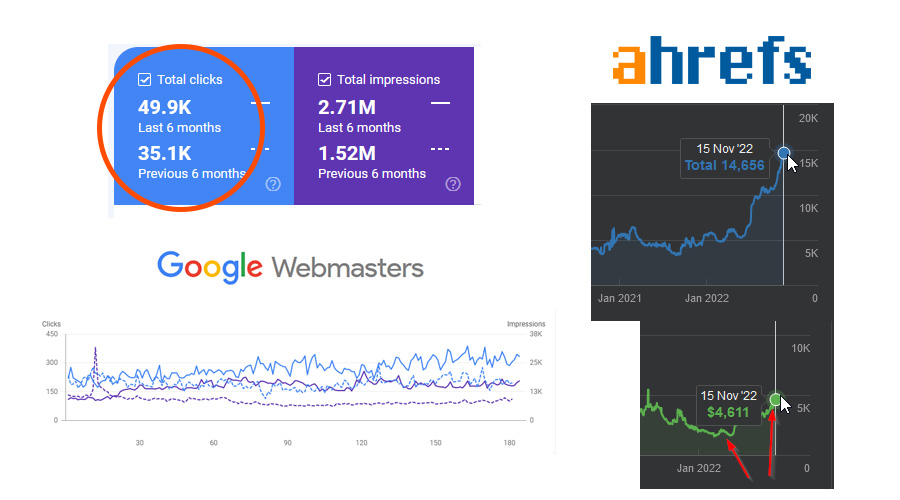
This is evident in my SEO case studies, which I keep current, so it accurately reflects what I can achieve right now (see 2023 SEO case studies).
Verified Reviews for My SEO Services
Several current and former clients have kindly put their names to public reviews for my services, to show that I provide real results to real people.
Notice no fancy logos?
I help smaller independent brands fight the goliaths in their industry and win.
This is far more difficult from an SEO perspective, but it’s also more rewarding.
My CMS Experience – Can I Help Your Store?
I can help you optimise all e-commerce sites no matter the CMS, but I have direct experience on the following platforms:



My SEO Expertise
- Specialist in e-commerce SEO for over 10 years.
- Started off in-house, creating and ranking an ecommerce website from scratch.
- Recent SEO results, no legacy case studies (see here).
- Over 233 e-commerce websites worked on since 2012.
- Over 50 public SEO reviews (see here, and here, and here, and here).
- Over 10,000 hours of hands-on e-commerce SEO in practice.
- Countless hours and money spent on SEO training, conferences, R&D, and testing.
Does That SEO Pitch Deck Have a Logo from 1999?
Many SEO agencies start by offering free services to generate case studies, which they then use to sell their services for the next 10 years.
Google changes so much in 6 months, that legacy studies can often be non-representative of the service you would receive.
Unlike them, my results page is updated regularly, so you’re confident I know what works in SEO right now.
Why Choose Me as Your SEO Specialist?
Expert SEO Tools

(with more too cutting edge to list publicly)
Google Released 11 Algorithm Updates in the Last 12 Months…
Is Your SEO Strategy Living in the Past?
As an e-commerce SEO specialist for over 10 years, I’ve lived through countless shifts in the Google algorithm, and helped my clients thrive through SEO that drives online revenue.
I update my SEO processes all the time, based on hours of training, conferences, discussions, and testing.
My Specialist E-Commerce SEO Process
1. Technical Audits – Strong Foundations
Controlling what Google indexes and crawls, and fixing any problems.
Particularly important in ecommerce, where faceted navigation can create infinite crawl black holes, causing Panda penalty and keyword cannibalization related issues.
2. Keyword Research, Mapping & Topic Clustering
Keyword research isn’t as easy as plugging a word into a tool.
It involves understanding what Google’s AI has determined is a unique topic, identifying areas for sub-topics, and mapping these out for a long term content plan.
3. NLP Backed On Page Optimisation to Feed The Google AI
Using NLP AI to mimic the way the Google AI understands topical relevance, optimising pages for both bots and users.
Including crafting titles for CTR, and understanding page topic for user intent.
4. Off Site, Links, & Entity Optimisation
Google uses off site signals to determine the trustworthyness and authority of a specific entity (aka your website/company).
I work to build relevance, strength, and positive sentiment for clients, resulting in higher rankings that will last.
This involves link building, schema.org and entity clustering, narrative influence, and more.
A Range of SEO Consultancy Options
Monthly SEO Services (most popular)
Best for consistent growth & simplicity.
For brands that want a hands off approach to SEO, letting me take the reigns.
I’ll work on your campaign monthly, implementing changes directly into your CMS, and reporting progress along the way.
This will take the site through all the stages of Technical, Keyword Research, On Page, and Off Page.
SEO Audits
Best for New Sites, DIY or Penalties.
If you want to self manage your SEO, but you feel your approach needs to be updated, then an SEO audit is perfect.
It can be used to refine your strategy, and get you moving in the right direction.
It’s also appropriate if you’ve recently had a site penalty, and want to uncover the reasons why.
And finally it’s perfect for new sites, where you may not have the budget for ongoing services until later in your growth curve.
International SEO & HREFLANG
HREFLANG implementation is one of the hardest aspects of technical SEO, which is why the web is littered with support and forum requests on the topic.
Many of the apps to automate it do it badly, and developers doing custom code often make mistakes.
I can help guide you through the international SEO process, helping you rank the appropriate version of a site in different locations.
Site Migrations
Site migrations are messy, and can destroy your SEO if you don’t know what you’re doing.
I’ve helped many sites successfully migrate to new domains and new platforms, helping them to address both the technical and content aspect of the migrations.
You can scale a service to fit how much help you need.
Hourly SEO Consulting
Best for specific SEO problems, or micro budgets.
If you know exactly what your problem is and just want an extra pair of eyes, then my hourly consulting is perfect for this.
It can also be used to answer SEO questions if you only have a small budget.
Keyword Research, Competitor Analysis & Content Mapping
Sites of all sizes often find it hard to understand where to focus.
Existing sites can often feel like they’ve “covered it all”, but may find they’ve duplicated a topic too many times (causing cannibalisation issues).
This service is designed to create a complete map of keywords in your space, map topics to existing/new pages, and identify topic duplication.
This can help owners and managers better understand where their site is at, and what they should focus on.
Authority Link Building
Proving to Google that you’re worth ranking.
Links are one of the biggest ranking factors in Google, and so without link building, you will struggle to compete in competitive niches.
I focus on links that are relevant to your site, from sites that receive traffic from Google.
Toxic Link Audits & Disavow Files
Good links help you, but toxic links can harm your rankings.
I help companies that have a large amount of toxic links to audit them, and submit a Disavow file to Google to discount them.
This is using Link Research Tools, the best in the business.
SEO Guides by CMS
If you have a specific issue with your e-commerce CMS SEO, I may have already published an article on how to solve it.
See my CMS based guides below:
Woocommerce | Shopify | Magento | Opencart
You made it to the end! Now contact me about your SEO project below:
You can also email me (info@matt-jackson.com) or call +44 1392 58 1669
FAQ’s
What is an e-commerce SEO consultant?
An e-commerce SEO consultant is an independent SEO practitioner that provides SEO services on a consultancy basis. This can involve hourly work, as well as SEO audits, and retainers.
E~-commerce requires a special set of SEO skills, designed to optimise the product and category pages of your store, as well as improving the conversion rate through conversion rate optimization (CRO).
The end goal is to improve your organic position for purchase intent keywords in Google search on both mobile and desktop, resulting in an increase in traffic in your Google Analytics and Google Search Console data. These will drive a sale, and complement your work with PPC and Social Media.
The process is about your customers and products, helping to demonstrate the value of features and encourage sales to your stores. This includes keyword research around other retailers, countries, and businesses, to understand how competitors are marketing.
Good inventory management is also important, as goods go in and out of stock, which can cause issues with bounce rate and technical SEO management issues like 404 errors.
Is SEO worth it for e-commerce?
Organic traffic from SEO should be your most profitable channel in the long term, so SEO is usually worth it for e-commerce sites. It does rely on you having a good product mix that satisfies the user intent. Whether it’s worth it or not depends on your return on investment, which varies depending on competitiveness, existing authority, and product competitive advantage.
How long does e-commerce SEO take?
E-commerce SEO takes as long as normal SEO, which varies depending on competition and existing website authority. Some changes in e-commerce SEO can have immediate impact within a week, such as creating a new page for a low competition keyword. But ranking for highly competitive keywords can take a lot longer and cost a lot more money.
How do e-commerce products do SEO?
To optimise e-commerce products for SEO, you should consider the important optimization elements (H1, Title, Meta Description), as well as the product images, and the broader user experience of the page (including reviews and FAQs). You should also ensure the page is crawlable with contextual internal links from relevant categories and blog posts.
I aim to ensure this site has the highest editorial standards.
